
The Birth of Civilization: How Mesopotamia Started It All
Updated: May 20

Before the world as we know it took shape, before nations and borders and everything in between, there was a stretch of land wedged between two rivers where the birth of civilization began. This was ancient Mesopotamia. And what happened in this ancient civilization would change everything. If you have ever wondered where civilization actually started, this is your answer. Not metaphorically. Literally.
The Land Between Two Rivers
The name Mesopotamia comes from the ancient Greek words meaning "between the rivers." Those rivers were the Tigris and the Euphrates, and together they carved out a fertile corridor of land that today falls mostly within the borders of modern Iraq, with portions stretching into Syria, Turkey, and Iran.
The land they watered was extraordinary. The rivers carried rich sediments that created fertile soil along their banks, making the surrounding land ideal for agriculture. For early human beings who had spent thousands of years wandering in search of food, this was a revelation. Here was a place where the earth itself seemed to want you to stay.
According to Britannica, agriculture in the higher rainfall zones and hilly borders of Mesopotamia began in the 10th millennium BCE, with settlements gradually developing as irrigation techniques allowed farming to expand across the region. This suggests that the fertile conditions of the land between two rivers allowed an ancient hunter-gatherer people to settle in the land, domesticate animals, and turn their attention to agriculture and the development of irrigation. Trade soon followed, and with prosperity came urbanization and the birth of the city.
Read that again. Ten thousand years BCE. We are talking about a depth of human history that is almost impossible to wrap your head around.

When Cities Were Born
Around 3400 to 3000 BC, all the key elements of urban civilization first appeared in one place: cities with monumental infrastructure and official bureaucracies overseeing agricultural, economic, and religious activities. This was not gradual. In historical terms, it happened almost overnight.
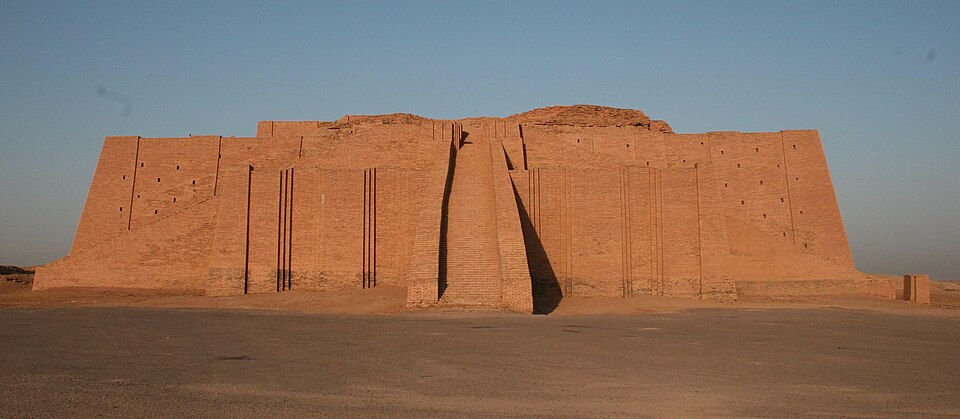
The city of Uruk was at the center of it all. By the time of the Uruk period, roughly 4100 to 2900 BCE, the volume of trade goods transported along the canals and rivers of southern Mesopotamia facilitated the rise of many large, stratified, temple-centered cities where centralized administrations employed specialized workers. During this period, Uruk became the most urbanized city in the world, surpassing for the first time 50,000 inhabitants.
50,000 people. In one city. Nearly six thousand years ago. The scale of that achievement is staggering.
And driving much of this growth was something that would alter the course of human history forever.
The Invention of Writing
Ask most people what the Sumerians are famous for and you will get a blank stare. That is a shame, because the Sumerians gave the world one of its most important gifts: the ability to write things down.
As Sumerian towns grew into cities, the people needed a way to keep track of business transactions, ownership rights, and government records. Around 3300 BC the Sumerians began to use picture symbols marked into clay tablets to keep their records.
These early symbols, called pictographs, eventually evolved into something far more sophisticated. Cuneiform is a system of writing first developed by the ancient Sumerians of Mesopotamia circa 3600 to 3500 BCE. It is considered the most significant among the many cultural contributions of the Sumerians. In cuneiform, a carefully cut writing implement known as a stylus is pressed into soft clay to produce wedge-like imprints that represent word signs and, later, phonograms or word concepts.
The name cuneiform itself comes from the Latin word for "wedge," which is exactly what those marks looked like pressed into soft clay. First developed around 3200 BC by Sumerian scribes in the ancient city-state of Uruk, in present-day Iraq, as a means of recording transactions, cuneiform writing was created by using a reed stylus to make wedge-shaped indentations in clay tablets.
Over time the system became remarkably sophisticated. As cuneiform transitioned from a pictographic to a logosyllabic system, the number of symbols decreased dramatically, from an unwieldy two thousand symbols to six hundred symbols by the end of the third millennium BCE. And during its 3,000-year history, cuneiform was used to write around 15 different languages including Sumerian, Akkadian, Babylonian, Assyrian, Elamite, Hittite, Urartian, and Old Persian.
Writing did not just help people track grain and goats. It gave humanity the ability to record its own story. To pass knowledge across generations. To create literature, law, religion, and science. Every book ever written, every law ever recorded, every piece of history that survived, traces its lineage back to those first wedge-shaped marks pressed into Mesopotamian clay.

The World's First Legal System
With cities came complexity. And with complexity came conflict. People needed rules. And Mesopotamia delivered.
The earliest extant set of laws from ancient Mesopotamia is the Code of Ur-Nammu, dating from circa 2100 to 2050 BCE, set down in the city of Ur. This was already a remarkably advanced system of governance, but the law code that would capture the world's imagination came a few centuries later.
The Code of Hammurabi was one of the earliest and most complete written legal codes, proclaimed by the Babylonian king Hammurabi, who reigned from 1792 to 1750 BC. The Hammurabi code of laws, a collection of 282 rules, established standards for commercial interactions and set fines and punishments to meet the requirements of justice.
Hammurabi's Code was carved onto a massive, finger-shaped diorite stele that was looted by invaders and finally rediscovered in 1901. Today it sits in the Louvre in Paris, and it is one of the most visited objects in the entire museum.
What makes Hammurabi's Code so remarkable is not just its age. It is how surprisingly modern some of its principles feel. The code mandates that in order to find someone guilty of a crime, evidence needs to be gathered and proof established. The "innocent until proven guilty" theme still resonates today. Historians also note that some of Hammurabi's laws suggest care and responsibility for marginalized groups, and we see in Hammurabi's code what could be considered the earliest alimony payments.
Yes. Alimony. Nearly four thousand years ago.
The code was also unflinching. The edicts range from family law to professional contracts and administrative law, often outlining different standards of justice for the three classes of Babylonian society: the propertied class, freedmen, and slaves. It was not a perfect system by any modern standard, but it was a system. And that mattered enormously.

What Mesopotamia Gave the World
It would be easy to think of Mesopotamia as a chapter in a dusty textbook. Something remote and irrelevant to modern life. But that would be a mistake.
Other important developments credited to the Mesopotamians include the domestication of animals, agriculture and irrigation, common tools, sophisticated weaponry and warfare, the chariot, wine, beer, the demarcation of time into hours, minutes, and seconds, religious rites, the sail, and legal codes.
Hours. Minutes. Seconds. The next time you check the time on your phone, you are using a system invented in ancient Mesopotamia.
The story of Mesopotamia is not simply about ancient ruins or long-forgotten kings. It is a story about the moment humanity began to transform from scattered groups of farmers into organized societies capable of shaping history.
That transformation did not happen by accident. It happened because people in a land between two rivers chose to stay, to build, to write, to govern, and to leave something behind. Something that echoes, thousands of years later, in every city, every law, every written word we have ever produced.
Mesopotamia did not just start civilization. In many ways, it started us.

Sources
Britannica: History of Mesopotamia
World History Encyclopedia: Mesopotamia
World History Encyclopedia: Cuneiform
World History Encyclopedia: Code of Hammurabi
History.com: How Mesopotamia Became the Cradle of Civilization
History.com: How the Code of Hammurabi Influenced Modern Legal Systems
Getty Museum: Mesopotamia: Civilization Begins
Archaeology Magazine: The World's Oldest Writing
Smarthistory: Cuneiform, an Introduction
EBSCO Research: Sumerians Invent Writing
Humanities LibreTexts: Mesopotamian Civilization Before the Ancient Dark Ages
Comments